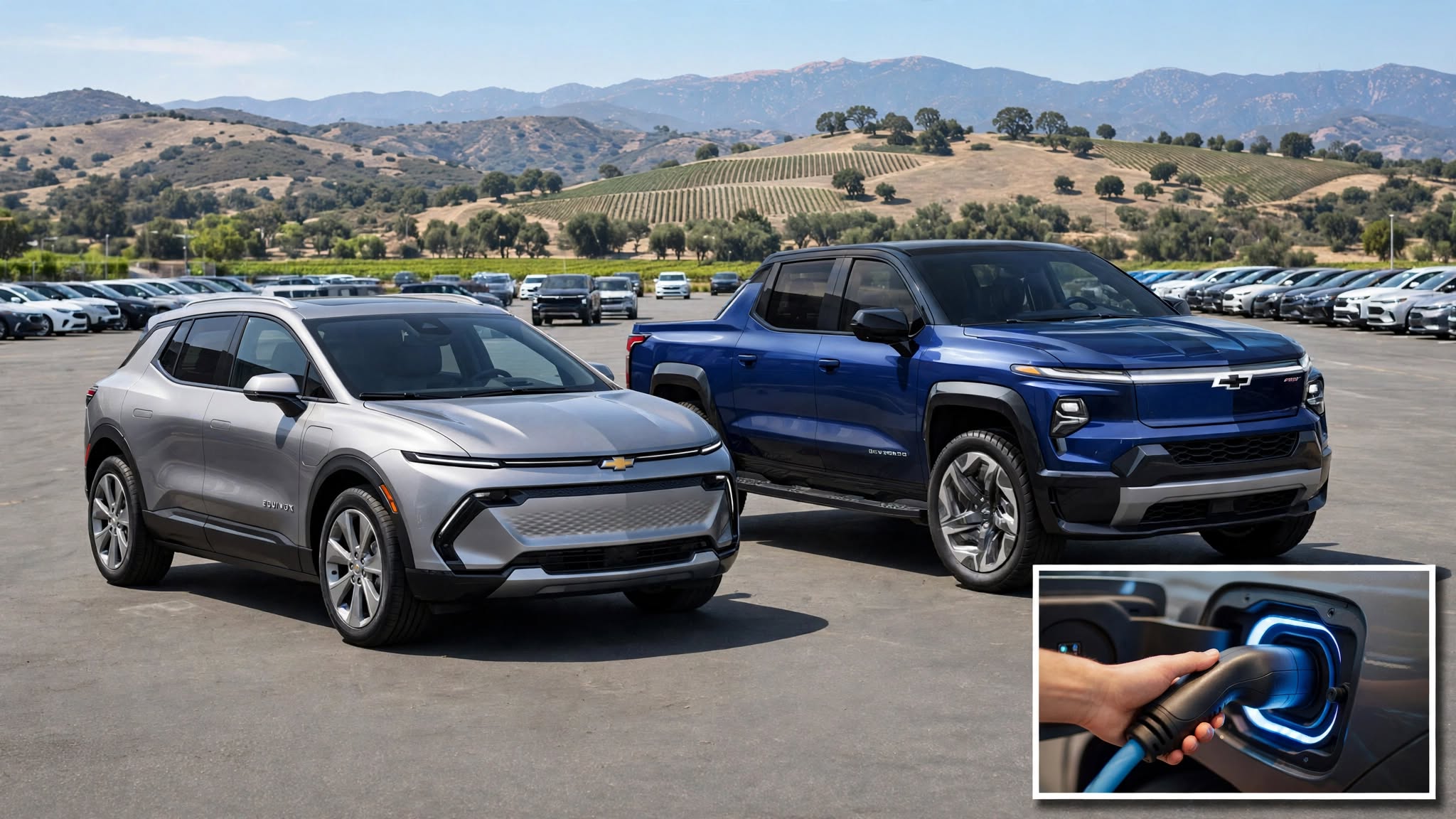
Buying a Used EV in California: An Honest Guide A used electric vehicle has never been a better value than it is right now. Used EV sales hit record highs in 2026 even after the federal tax credit ended, and a three-year-old EV now often costs about the same as a comparable used gas car. But buying a used EV is different from buying a used gas car. Battery health, charging access, tires and incentives all work differently. This guide is the honest version: what's great, what to watch for, and how to decide if an EV, a hybrid, or a gas vehicle fits your life on the Central Coast. Why a Used EV Makes Sense in California Right Now The first owner already took the depreciation hit. EVs lose value faster than gas cars in their first few years, which is bad news for the original buyer and great news for you. A 2–3 year old EV can cost thousands less than the same model new, with most of its battery warranty still left. Fuel savings are bigger here than almost anywhere. California regular gas averaged over $6.10 a gallon in mid-October 2026, about $1.77 above the national average ( California Today). Electricity isn't cheap here either, but charging at home overnight still wins by a wide margin: Fuel source (12,000 miles/year) Cost per 100 miles Cost per year Gas SUV, 28 mpg at $6.10/gal ~$22 ~$2,600 Equinox EV, home charging on PG&E EV2-A off-peak (~23¢/kWh) ~$7 ~$860 Equinox EV, public fast charging (~55¢/kWh) ~$17 ~$2,060 Estimates using the Equinox EV's EPA rating of 31.2 kWh per 100 miles ( GreenCars) and PG&E's EV2-A off-peak rate. Your rates and driving will vary. Less maintenance. No oil changes, spark plugs, timing belts, transmission fluid or exhaust repairs. Regenerative braking also means brake pads often last far longer than on a gas car. What you no longer get. Two perks are gone, so don't let anyone sell you on them. The federal used-EV tax credit ended September 30, 2025, and California's Clean Air Vehicle decals for solo carpool-lane access stopped being valid that same day ( CARB). Used Chevy EVs Worth a Look Chevrolet has sold more affordable EVs than almost anyone, so there's a deep pool of used ones. Here's what to know about each. Model Model years EPA range when new What used buyers should know Bolt EV / Bolt EUV 2017–2023 247–259 mi Many had the whole battery replaced under GM's recall, and that new pack got a fresh 8-year/100,000-mile warranty from the install date. Slower DC fast charging (about 55 kW peak). Equinox EV 2024–present Up to 319 mi (FWD), 307 mi (AWD) The range-per-dollar leader. Used 2024 models are already listing in the mid-to-high $20,000s. Blazer EV 2024–present Varies by trim Steep early depreciation makes it a strong used value. Early units had software problems and a stop-sale, so ask for proof every recall and update was done. Silverado EV 2024–present Varies by trim Huge battery and real truck capability, but it's the heaviest of the group, so budget for faster tire wear (see below). A note on the old Bolt recall. It sounds scary, but it's actually a plus for used buyers. A 2019 Bolt with a recall battery installed in 2022 has newer cells and warranty coverage running into 2030 ( Recurrent). Run the VIN through Chevy's recall lookup or ask us to pull the service history. Don't overlook the new 2027 Bolt. It starts at $28,995 with 262 miles of EPA range, a longer-lasting LFP battery and a built-in Tesla-style (NACS) charging port ( Electrek). If this is your first EV, the MyFirstEV discount on a new one (below) can put it within a few thousand dollars of a used model. Range Loss on Older EVs: The Honest Numbers Yes, EV batteries lose capacity over time, but far more slowly than most people fear. The average EV keeps about 97% of its original range after three years and 95% after five, according to battery-data firm Recurrent. Fleet tracker Geotab measured an average loss of 2.3% per year across more than 22,700 vehicles ( Gizmodo). The most important thing to check: how much battery warranty is left. Degradation averages are reassuring, but the warranty is what actually protects your wallet. Chevy EV batteries are covered for 8 years or 100,000 miles from the date the car was first sold, and that coverage transfers to you. A three-year-old EV with 30,000 miles still has about five years and 70,000 miles of protection. One with 90,000 miles has almost none, so price it accordingly. For Chevy specifically, Recurrent's data shows Bolts keep about 96% of their range after three years and 94% after five ( Recurrent). In plain terms, a 2020 Bolt rated at 259 miles new should still show roughly 240-plus miles on a full charge. Older is where it gets riskier. Among EVs built from 2011 to 2016, roughly one in twelve needed a new battery pack. For model year 2022 and newer, Recurrent puts the replacement rate at just 0.3% ( WebProNews, Gizmodo). Early air-cooled packs, like the first Nissan Leafs, are the ones that earned EVs their bad reputation. What speeds up wear: years in extreme heat, a heavy diet of DC fast charging, and regularly sitting at 100% or near empty. The Central Coast's mild climate is about as easy on a battery as it gets. How to check a used EV's battery: Ask for a battery health report. Recurrent and similar services, plus many dealers, can show state of health as a percentage. Charge it to 100% (or ask the dealer to) and look at the estimated range, keeping in mind the estimate reflects recent driving style. Confirm the warranty end date and mileage limit. Ask for the original in-service date and do the math on both time and miles left. On a 2017–2023 Bolt, confirm whether the recall pack was installed and when. Range also drops in cold weather. A Bolt at 32°F gets about 69% of its rated range ( Recurrent). That matters more on a ski trip to Mammoth than a commute to Santa Maria. MyFirstEV and Other California Incentives MyFirstEV is California's instant discount for first-time EV buyers, launched in August 2026 after the federal tax credit ended. It takes $3,500 off a new EV with an MSRP up to $50,000, or $1,750 off a used EV sold for $25,000 or less, right at the dealership with no paperwork afterward ( CARB). Nearly 12,000 Californians used it in the first ten weeks ( The EV Report). The fine print matters: First EV only. If you've ever owned or leased a battery-electric or fuel cell vehicle, in any state, you don't qualify. One incentive per person. No income cap. Eligibility depends on being a first-time EV buyer, not on household income. Used is narrower than new. The $1,750 used discount only applies to certified pre-owned EVs at least two model years old, sold through a brand that offers the used incentive. First come, first served. Each automaker's share of funding can run out. Tesla's was gone within days. The honest Chevy answer: As of mid-October 2026, Chevrolet offers MyFirstEV on new EVs only. The used discount is currently limited to Ford, Lucid, Rivian and Volvo ( Elevate Motor, citing CARB's Oct. 15 list, Shop Bestest). So a used Bolt or Equinox EV won't qualify today, but a first-time buyer can take $3,500 off a new Bolt or Equinox EV. Program status changes, so check CARB's MyFirstEV page or ask us before you buy. Local rebates most shoppers miss. If your electricity comes through Central Coast Community Energy (3CE), which serves Buellton and much of Santa Barbara County, its Electrify Your Ride program offers a used EV rebate of $1,000 to $2,500 depending on income, plus $2,000 to $3,000 toward a home charger and installation ( 3CE). These apply to used Chevy EVs. Income-qualified programs. Lower-income households may qualify for larger state grants through Clean Cars 4 All or the Driving Clean Assistance Program, which can cover used EVs and charging. Funding and rules shift often, so check DriveClean.ca.gov for current availability. Charging: Home Setup and Public Access The single biggest predictor of whether you'll love an EV is whether you can charge where you sleep. Public charging works, but home charging is where the savings and convenience live. Level 1 (a regular 120V outlet) adds about 3 to 5 miles of range per hour ( EnergySage). Plugged in overnight, that's roughly 35 to 50 miles. If you drive 30 miles a day, a garage outlet may be all you ever need. Level 2 (240V, like a dryer outlet) refills most EVs overnight from nearly empty. Here's what a typical install runs: Item Typical cost Charger hardware $300–$600 Installation (wiring, breaker, permit) $800–$3,000 Sub-panel, if needed $500–$1,500 Main panel/service upgrade, if needed $1,500–$4,000+ Source: EnergySage. Long wire runs from the panel to the garage add cost. Get a quote before you buy the car. 3CE customers can get $2,000 to $3,000 back on charger hardware and installation ( 3CE), which covers most standard installs. Pick the right electric rate. On PG&E's EV2-A plan, overnight charging is the cheapest power PG&E sells, while 4 to 9 p.m. is the most expensive ( PG&E). Every Chevy EV lets you schedule charging, so set it and forget it. Renting? California law gives many renters the right to install a charger at their own expense with written notice to the landlord, with exemptions for small properties and rent-controlled units ( Green Car Reports). If you truly can't charge at home or work, think hard before buying any EV. Public and road-trip charging. Chevy EVs can now use Tesla Superchargers. Every 2027 GM EV, including the new Bolt, has the Tesla-style port built in. Earlier Equinox, Blazer and Silverado EVs, and 2017–2023 Bolts, use GM's $275 NACS adapter ( Electrek, GM TechLink). Ask whether the adapter comes with the car. Keep in mind older Bolts fast-charge slowly, taking about 43 minutes to add 100 miles, so they're better commuters than road-trippers. Tires: The EV Cost Nobody Mentions EV tires wear out faster, and it surprises a lot of owners. Battery packs make EVs significantly heavier than comparable gas vehicles, and electric motors deliver full torque instantly. The tire industry's commonly quoted figure is about 20% less tread life on an EV ( Tire Rack via Collision Repair). J.D. Power found EV owners expect the same tire life as a gas car and are less satisfied when they don't get it ( J.D. Power). A gas car also gets lighter as its tank empties. An EV carries the same battery weight every mile. When shopping used: Check tread depth on all four tires. If they're near replacement, factor that into the price. Make sure replacements are the right load rating for the vehicle. Many EVs need higher load capacity tires (often marked "HL" or "XL"). Ask whether the tires are the original low-rolling-resistance type. Cheap substitutes can noticeably cut range and add road noise. To make them last: Check pressure monthly. Underinflation wears tires fast on a heavy vehicle. Rotate on the schedule in the owner's manual, and don't skip alignment checks. Go easy on hard launches. Instant torque is fun, and it costs rubber. The heavier the EV, the bigger the effect. A Silverado EV will go through tires faster than a Bolt, so budget accordingly. Should You Get a Hybrid Instead? An Honest Take For some drivers, a hybrid is the smarter choice, and we'd rather tell you that than sell you the wrong car. Here's how the three options really compare. Gas (28 mpg) Hybrid (45 mpg) EV, charged at home Fuel cost per 100 miles* ~$22 ~$14 ~$7 Needs home charging No No Strongly recommended Oil changes and engine upkeep Yes Yes No Road trips Easiest Easiest Plan charging stops Qualifies for MyFirstEV No No Yes (new; used varies by brand) *Gas at $6.10/gallon; EV at PG&E's EV2-A off-peak rate, using Equinox EV efficiency. A hybrid makes more sense if you can't charge at home or work, you regularly drive long highway stretches, or you tow. You'll still cut your fuel bill by about a third versus a typical gas SUV, with zero change to your routine. An EV makes more sense if you can charge at home and most of your driving is local. You'll save roughly half again over a hybrid on fuel, and skip engine maintenance entirely. Plug-in hybrids sit in between, with a catch. A PHEV only delivers its savings if you plug it in nearly every day. Skip charging and you're hauling a heavy battery around in what's basically a regular hybrid, with two powertrains to maintain. The Chevy picture. Chevrolet doesn't sell a mainstream hybrid right now, though GM confirmed in October 2026 that hybrids are coming to its U.S. lineup ( TechCrunch). On the used side, the Chevy Volt (2011–2019) remains a solid plug-in hybrid. Second-generation Volts (2016–2019) were rated about 53 miles of electric range, enough to cover most commutes before the gas engine kicks in. They can't DC fast charge, and remaining battery warranty on even the newest Volts is running out ( InsideEVs). Your Used EV Checklist Bring this list when you shop, whether you buy from us or anyone else. Battery warranty left. This is the big one. Chevy's 8-year/100,000-mile coverage starts on the original in-service date, not the model year. Ask for that date and check both time and miles remaining. Battery health report. Ask for a state-of-health percentage, not just the range on the dash. Recall and software history. Run the VIN. On a 2017–2023 Bolt, confirm the battery recall work. On an early Blazer EV, confirm all software updates are done. Charging test. Plug it into a Level 2 charger and, if possible, a DC fast charger. Make sure the charge cord (and any Supercharger adapter) comes with the car. Tires. Check tread depth and load rating, and price in replacements if they're worn. Connected services. Make sure the previous owner's account is removed from the myChevrolet app, and check whether OnStar or Super Cruise plans need renewing. Insurance quote first. EVs cost about 42% more to insure on average, roughly $3,159 a year versus $2,218 for gas cars ( Insurify, June 2026). Rates vary a lot by model, so get a real quote before you commit. Home charging plan. Get an electrician's quote and look at your utility's EV rate before you buy. Incentives before you sign. Confirm MyFirstEV and 3CE eligibility in advance. MyFirstEV is applied at the point of sale and can't be added later. Your real daily range. Take your longest regular round trip, add 30% for cold days, freeway speeds and battery aging, and make sure the car clears it comfortably. The Bottom Line A used EV can be one of the smartest buys on the road in California today, as long as it fits how you live. If you can charge at home and most of your driving is local, the savings are real and the battery worries are mostly outdated. If you can't charge at home, a hybrid may serve you better, and that's fine too. At Rio Vista Chevrolet in Buellton, we'll give you straight answers on battery health, warranty, incentives and charging, with no-markup pricing and free delivery anywhere in California. Browse our used EVs online or call us at 805-688-3231.